
Knee Osteoarthritis and Current Treatment Technologies

Knee Osteoarthritis and Current Treatment Technologies
Knee osteoarthritis (OA) is the most common cause of knee pain. It occurs due to degeneration of articular cartilage, deterioration of synovial fluid quality, and reduced joint lubrication. These changes lead to knee pain, stiffness, reduced range of motion, bone spur formation (osteophytes), and even joint deformity. As a result, patients experience reduced quality of life and may rely on long-term pain medications.[1,3]

Does Everyone Develop Knee Osteoarthritis with Age?
Age is a major risk factor for knee osteoarthritis. Symptoms commonly begin after the age of 55. Similar to tire wear over time, joint cartilage gradually degenerates with use. However, individuals who maintain good physical health may delay joint deterioration. Other important risk factors include:[1,2] such as
- Body Weight
Every 1 kilogram increase in body weight adds approximately 3–4 kilograms of additional load on each knee during walking.
- Genetics
Every 1 kilogram increase in body weight adds approximately 3–4 kilograms of additional load on each knee during walking.
- Inflammatory Joint Diseases
Conditions such as rheumatoid arthritis or crystal deposition diseases accelerate joint damage.
- History of Injury
Previous knee injuries, such as meniscal tears or anterior cruciate ligament (ACL) rupture, can disrupt joint stability and increase the risk of osteoarthritis.
Current Treatment Approaches
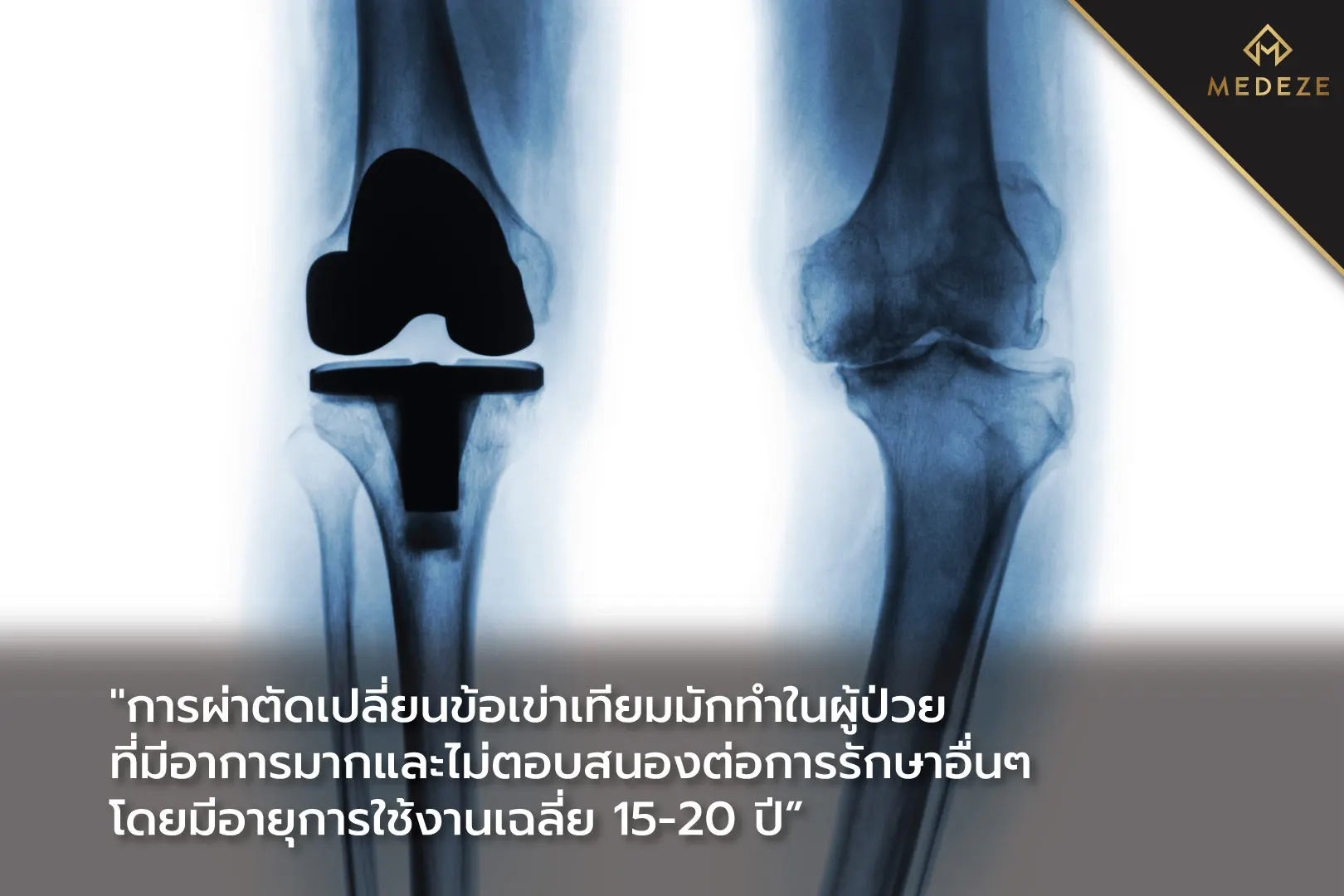
Management typically begins with lifestyle modifications, including avoiding deep knee bending (such as kneeling or squatting), weight reduction, and pain-relief medications (analgesics or anti-inflammatory drugs). Additional treatments may include physical therapy, temporary knee braces, intra-articular steroid injections, viscosupplementation (artificial joint lubricants), or total knee replacement surgery in severe cases that do not respond to conservative treatment.[1,2]
Emerging Treatment Options[3]
Due to the high prevalence and disability caused by knee osteoarthritis, continuous efforts have been made to develop new treatment strategies. Emerging options include:
- Platelet-Rich Plasma (PRP) Injection
involves concentrating platelets from the patient’s own blood and injecting them into the knee joint. Growth factors released from platelets aim to stimulate cartilage repair and improve joint lubrication.

- Robot-Assisted Total Knee Replacement
enhances surgical precision and improves alignment of the prosthetic joint, potentially improving long-term outcomes.

- Mesenchymal Stem Cell (MSC)
can self-renew and differentiate into various cell types. In knee osteoarthritis, MSCs are injected into the joint to promote cartilage regeneration and reduce inflammation through paracrine signaling. Stem cells may be derived from various tissue sources, particularly adipose tissue or umbilical cord tissue. Multiple studies have reported favorable outcomes in patients receiving intra-articular stem cell therapy.
[4]
With advancements in medical technology, patients with knee osteoarthritis now have more treatment options. These approaches can be tailored to individual needs, aiming to restore mobility, reduce pain, and improve overall quality of life.
References
1) สมาคมรูมาติสซั่มแห่งประเทศไทย. แนวทางเวชปฏิบัติการรักษาโรคข้อเข่าเสื่อม (Guideline for the Treatment of Osteoarthritis of Knee). Online. [2010]. Available at : https://www.thairheumatology.org/wp-content/uploads/2016/08/Guideline-for-Management-of-OA-knee.pdf. [Sep 2021]
2) David Zelman. Osteoarthritis of the Knee (Degenerative Arthritis of the Knee). Online. [Jun 2021]. Available at : https://www.webmd.com/osteoarthritis/ostearthritis-of-the-knee-degenerative-arthritis-of-the-knee. [Sep 2021]
3) David Zelman. What’s New in Knee Osteoarthritis Treatments?. Online. [Jun 2021]. Available at : https://www.webmd.com/osteoarthritis/knee-arthritis-treatment-advances. [Sep 2021]
4) Pak, J. (2011). Regeneration of human bones in hip osteonecrosis and human cartilage in knee osteoarthritis with autologous adipose-tissue-derived stem cells: a case series. Journal of medical case reports, 5(1), 1-8.