
What are Stem Cells?
What are their therapeutic applications?

What are Stem Cells? Why Storage Matters and Their Therapeutic Applications
It is an undeniable fact that serious illness can impact us at any stage of life. Despite the rapid evolution of modern medicine, many patients still face significant hurdles whether it is the side effects of conventional treatments or the lingering damage left behind even after a disease has stabilized. Fortunately, breakthroughs in medical science have revolutionized how we isolate and utilize stem cells. Today, we can efficiently harvest and store Mesenchymal Stem Cells (MSCs) from the umbilical cord and adipose (fat) tissue. Because these cells retain their remarkable ability to multiply and transform, they have opened new doors for a wide range of medical applications.
Stem Cells, or "Master Cells," are the body’s primary building blocks. They possess the unique ability to renew themselves indefinitely and have the potential to develop into almost any type of cell the body needs. Using stem cells in medical treatment represents a shift toward Restorative Therapy. Instead of simply managing symptoms, this approach focuses on repairing and replacing damaged cells, helping the body’s internal systems return to their optimal functional state.
KEY TAKEAWAY
Stem cells are undifferentiated cells capable of self-renewal and differentiation into specialized cell types, forming the basis of regenerative medicine.
They can be collected from four main sources — cord blood, cord/placenta tissue, adipose tissue, and hair follicles — each yielding cells with different medical applications.
Applications range from treating blood disorders to repairing damaged tissue, addressing degenerative diseases, and modulating immune function.
In certain cases, stem cells can be shared among the original donor, siblings, or family members with compatible tissue matching.
MEDEZE is an AABB- and ISO 9001:2015-certified stem cell bank that uses cryopreservation technology to store cells for up to 60 years.
What are Stem Cells?
Stem Cells, or "Master Cells," are specialized cells in the body that have not yet developed into a specific type. They possess two remarkable abilities: Self-renewal (the ability to multiply and create more stem cells) and Differentiation (the capacity to transform into various cell types, such as muscle, nerve, bone, or blood cells). These unique properties have made stem cells a cornerstone of modern medicine—particularly in the field of Regenerative Medicine, where they serve as a vital key to long-term health and recovery.
Currently, stem cell research and clinical applications span a wide range of medical fields, including the treatment of blood disorders, immune system conditions, and heart disease, as well as the repair of degenerated tissues and organs. Furthermore, advancements in stem cell storage technology have expanded their use into Anti-Aging and Aesthetic Medicine, offering new possibilities for rejuvenation and long-term wellness.
Where can stem cells be collected from?
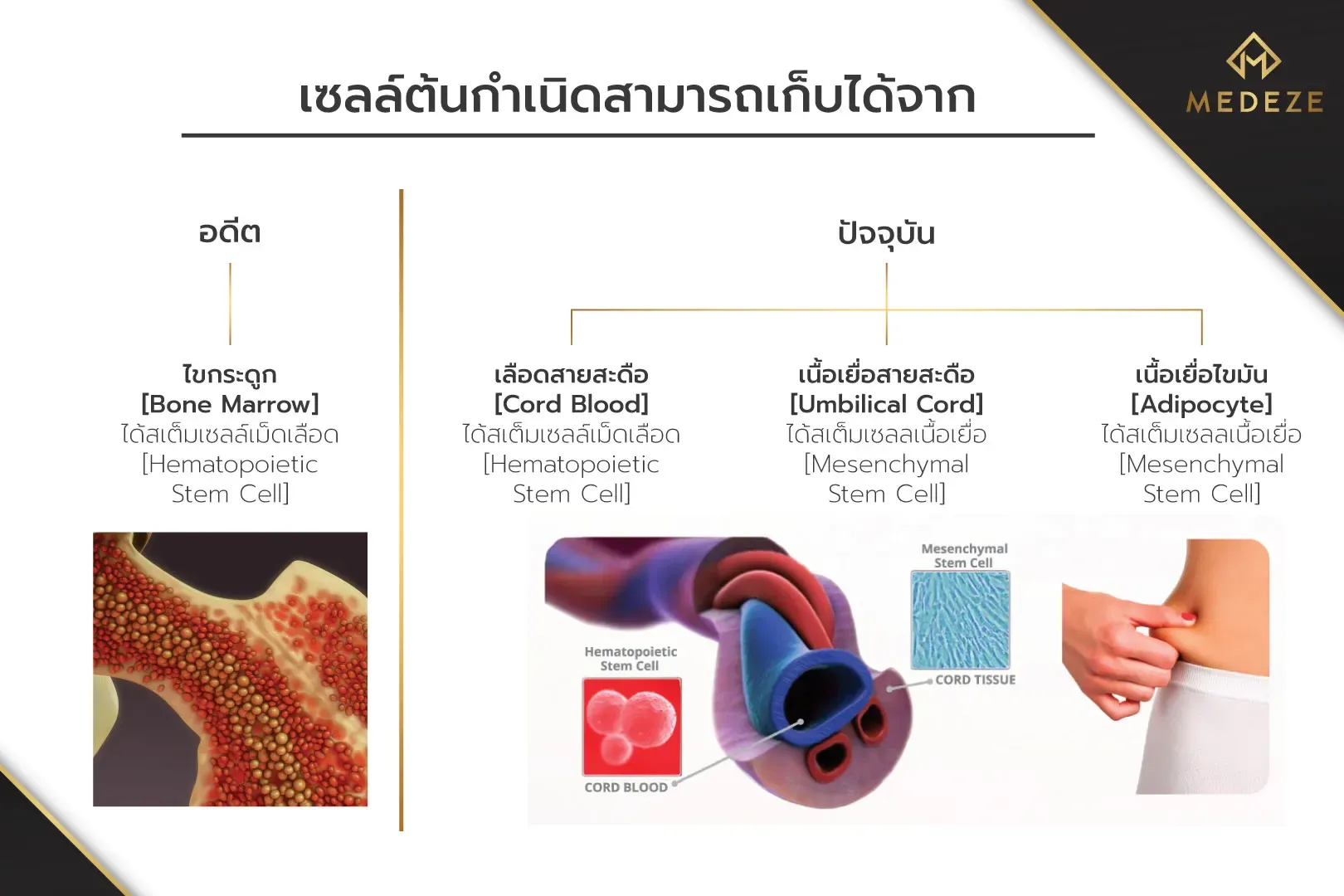
Stem cells can be harvested from various sources within the body. Each source provides unique types of stem cells with specific properties and distinct medical applications.
Cord Blood serves as a primary source of Hematopoietic Stem Cell (HSC) , which act as the essential building blocks of the blood system by developing into red blood cells, white blood cells, and platelets to treat immune disorders and conditions such as Thalassemia and Leukemia.
Placenta and cord tissue are exceptionally rich sources of Mesenchymal Stem Cells (MSCs) , which are widely studied in regenerative medicine for their ability to differentiate into various cell types and repair damage caused by cellular degeneration throughout the body.
Adipose tissue is a significant and accessible source of Mesenchymal Stem Cells (MSCs) that can be collected at any stage of life, providing a vital resource for personalized health restoration and advanced medical research.
Hair follicle cells offer a modern and convenient source of stem cells that are collected through a simple extraction process and then isolated and preserved using cryopreservation to ensure long-term quality and biological viability.
The Medical Benefits of Stem Cells
Stem cells play a pivotal role in contemporary healthcare, particularly within the field of Regenerative Medicine , due to their extraordinary ability to repair, revitalize, and replace damaged cells throughout the body. Currently, extensive research and clinical applications have integrated stem cell therapy into various medical disciplines, such as:
Treatment of Blood-Related Diseases Stem cells are used to treat various blood disorders such as thalassemia and leukemia, particularly through the use of Hematopoietic Stem Cells (HSCs) to restore the body's blood-forming system.
Regeneration and Repair of Damaged Tissues Stem cells can support the repair of tissues such as bone, cartilage, muscle, and skin.
Treatment of Degenerative Diseases There are studies on using stem cells to treat diseases caused by cellular degeneration such as osteoarthritis, Parkinson's disease, and heart disease.
Immune System Modulation Certain types of stem cells such as Mesenchymal Stem Cells (MSCs) possess properties that help regulate inflammation and balance the immune system.
Future Medical Technology Development Currently, there is extensive global research on stem cells to develop new treatment methods and increase opportunities for long-term health recovery.
What are the therapeutic applications of stem cell
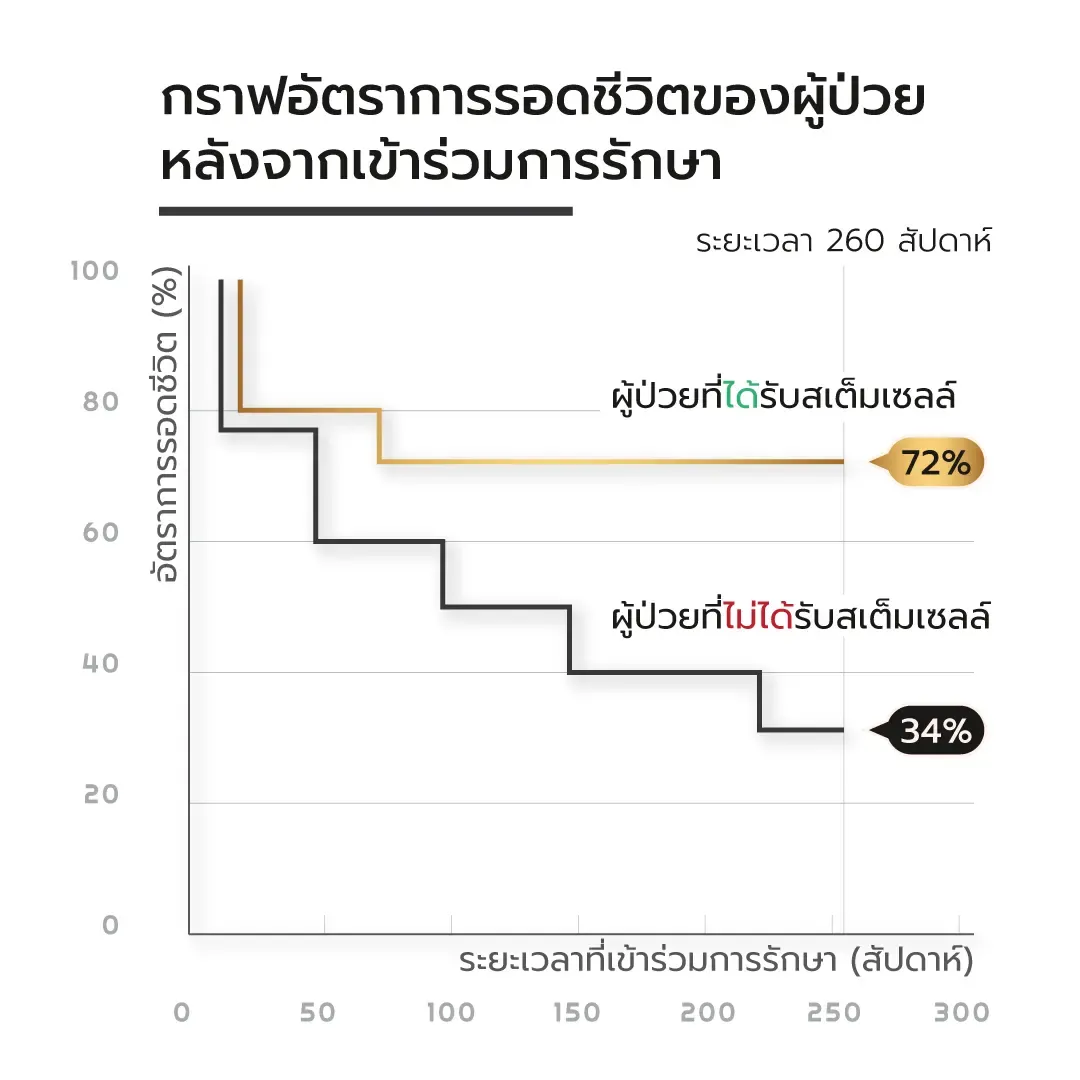
Diseases for which stem cells offer new hope for treatment (Based on the ATPMs Sandbox pilot research project for target diseases)
Degenerative Disc Disease / Spinal Cord Degeneration Use of the patient's own autologous adipose-derived stem cells to regenerate tissue and reduce pain without surgery.
Dermatological Diseases, Skin Rejuvenation, and Aging Use of autologous adipose-derived stem cells to repair skin cells, reduce wrinkles, and increase elasticity.
Colorectal Cancer Use of immunotherapy approaches, specifically NK Cells, to strengthen the immune system's ability to fight cancer.
Who can use Stem Cells?
Stem cells that have been stored can be utilized for medical benefits across various groups, depending on the type of stem cells, tissue matching, and medical discretion. Generally, those who can use stem cells include:
The Cell Owner Individuals who have stored their own stem cells can use them for future treatment or body restoration, which helps reduce the risk of immune system rejection.
Siblings In certain cases, stem cells can be used to treat siblings with similar genetics, particularly for diseases related to the blood or immune system.
Family Members Certain direct relatives, such as parents or immediate family, may be able to share stem cells if there is an appropriate level of tissue compatibility.
Other Patients In some specific treatments, stem cells may be used for unrelated patients if there is a suitable tissue match and all medical requirements are met.
MEDEZE the #1 Leading Stem Cell Bank in ASEAN
Before choosing to store stem cells, it is essential to select a stem cell bank with reliable standards, technology, and quality control systems. MEDEZE GROUP has continuously developed technologies and innovations for stem cell storage, utilizing international standards and technologies as follows:
Closed-System Sterile Medical Laboratory Features strictly controlled quality environments.
Systematic Quality Management Certified with ISO 9001:2015 standards continuously since 2013.
AXP AutoXpress® Platform Automated Processing Enhances precision in the isolation of hematopoietic stem cells.
Cryopreservation for Long-Term Potency Utilizes a controlled-rate freezing process designed to maintain cell quality over the long term.
Transparent Storage Certification Provides complete documentation including cell type, cell count, viability rates, and detailed packaging information.
AABB Accreditation Certified as a Stem Cell Bank covering the isolation, cultivation, and cryopreservation of stem cells from cord blood, cord tissue, and adipose tissue.
Therapeutic Applications in the ATMPs Sandbox Project The only private sector participant in Thailand selected for the advanced stem cell drug development project, supporting the advancement of Stem Cell Therapy and NK Cell Immunotherapy under national standards.
Driving Precision Medicine Innovation in Thailand Plays a key role in developing Advanced Therapy Medicinal Products (ATMPs) domestically to reduce import dependency and elevate the Thai public health system in the long term.
Frequently Asked Questions (FAQs)
Key Considerations Before the Stem Cell Banking Process
Before storing stem cells, you should study information regarding the source of the cells, collection methods, and the standards of the stem cell bank, as well as the storage objectives such as for future disease treatment or long-term health maintenance. Furthermore, it is essential to choose a facility with certified laboratory standards and a reliable team of experts.
Is Stem Cell Collection Dangerous or Painful?
Stem cell collection depends on the source of the cells, such as cord blood, umbilical cord tissue, or adipose (fat) tissue. Generally, it is a medical procedure performed by specialist physicians under standardized and safe protocols. The level of discomfort depends on the collection method, but most procedures are brief with low risk. At MEDEZE, we utilize techniques designed to minimize pain and leave no scarring during the stem cell collection process.
When Can Stem Cells Be Collected?
The timeframe for stem cell collection varies by cell source. For instance, stem cells from cord blood and umbilical cord tissue can be collected immediately following birth. In contrast, stem cells from adipose tissue can be collected during adulthood, depending on the individual's health and a physician's assessment.
How Long Can Stem Cells Be Stored?
Stem cells can be stored long-term using Cryopreservation technology, a process of freezing cells at ultra-low temperatures to maintain their quality and potency. At MEDEZE, stem cells can be stored for up to 60 years.
Unlock Longevity and Personalized Care with Stem Cells at MEDEZE
Stem cells are specialized cells with the unique ability to self-renew and differentiate into various cell types within the body. Their capacity to repair and regenerate damaged tissues has made them a cornerstone of modern medical technology. Today, stem cells can be harvested from several sources, including a newborn’s cord blood and umbilical cord tissue, as well as adult adipose (fat) tissue and hair follicle tissue. Each source offers distinct properties and medical potential. Furthermore, ongoing research continues to expand their therapeutic applications, ranging from blood disorders and degenerative diseases to tissue regeneration and long-term wellness.
Choosing to bank stem cells is a forward-thinking approach to future health planning. Selecting a stem cell bank with proven standards and reliable technology is a critical factor in this process. MEDEZE GROUP is a leader in stem cell banking within Thailand and the ASEAN region, utilizing international standards for cell isolation and storage. We are committed to advancing medical technology and stem cell innovation to enhance opportunities for health restoration and proactive care in the years to come.