
Cancer Is Not as Distant as We Think: Exploring Prevention and Treatment Options with NK Cells (Natural Immunity)

Cancer Is Not as Distant as We Think: Exploring Prevention and Treatment Options with NK Cells (Natural Immunity)
Cancer is a disease caused by a group of abnormal body cells with genetic alterations. These changes may result from mutations or direct damage to the genetic code (DNA). Such abnormalities lead to the loss of normal cellular control, particularly the ability to regulate cell division. As a result, cancer cells multiply uncontrollably and may invade or spread (metastasize) to other parts of the body.[1] Scientists have identified more than 50 genetic mutations associated with increased cancer risk. Individuals can undergo genetic testing (Genetic Test) at hospitals or specialized laboratories to assess inherited cancer risk. A well-known case is actress Angelina Jolie, who was found to carry mutations in the BRCA1 and BRCA2 genes. These mutations significantly increase the risk of breast cancer, up to five times higher than in the general population. As a preventive measure, she chose to undergo a bilateral mastectomy to reduce her cancer risk.[1,2]
- Genetic Factor
hereditary cancers account for approximately 5–10% of all cancer cases.[3] Scientists have identified more than 50 genetic mutations associated with increased cancer risk. Individuals can undergo genetic testing (Genetic Test) at hospitals or specialized laboratories to assess inherited cancer risk. A well-known case is actress Angelina Jolie, who was found to carry mutations in the BRCA1 and BRCA2 genes. These mutations significantly increase the risk of breast cancer, up to five times higher than in the general population. As a preventive measure, she chose to undergo a bilateral mastectomy to reduce her cancer risk.[4]
- Smoking
(including cigarettes, cigars, and pipes), as well as exposure to secondhand smoke, significantly increases the risk of lung cancer. Tobacco smoke contains multiple carcinogens released during combustion, including substances such as lead and formaldehyde.
- Carcinogenic Foods
are associated with increased cancer risk. These include naturally occurring toxins, such as aflatoxins from mold-contaminated nuts that increase liver cancer risk, as well as synthetic or processed substances. Examples include certain artificial food colorings, pesticide residues, processed meats, and food preservatives.[5]
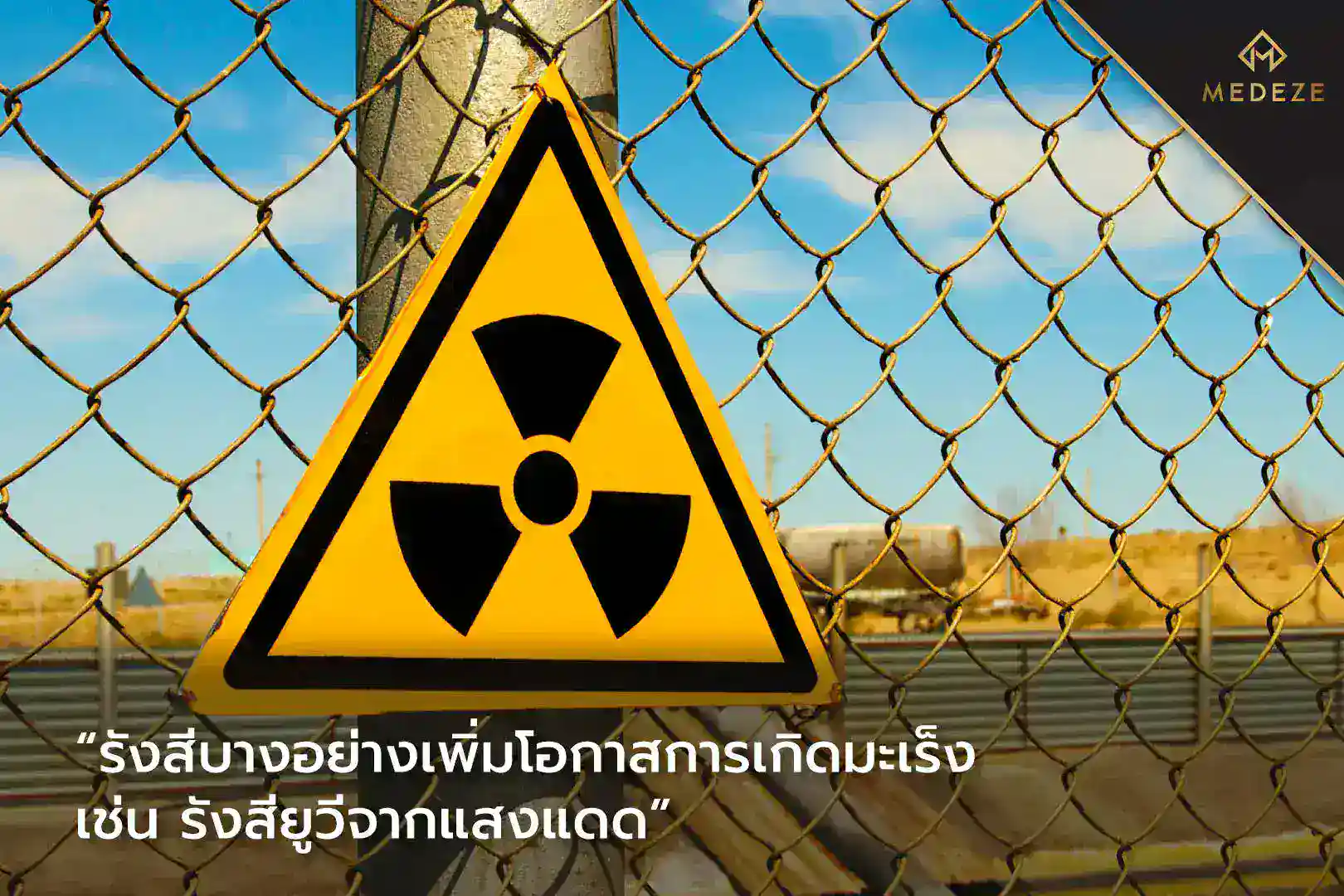
- Radiation Exposure
can directly damage DNA. For example, ultraviolet (UV) radiation from sunlight increases the risk of skin cancer. Medical radiation exposure, such as repeated X-rays, may also contribute to cancer risk.[6]
- Certain Infections
are linked to cancer development. For example, infection with the human papillomavirus (HPV) increases the risk of cervical cancer. Chronic hepatitis B or C infection can lead to liver cancer. Additionally, certain lymphomas are associated with human immunodeficiency virus (HIV) infection.
Even if individuals are not directly exposed to the risk factors mentioned above, cellular mutations can still occur. Some cells in the body continuously divide, and errors may arise during cell division due to hidden or unavoidable factors. While certain risks cannot be completely avoided, not everyone develops cancer. In early stages, abnormal or mutated cells are often detected and eliminated by Natural Killer (NK) cells, also known as cytotoxic immune cells. As part of the body’s frontline immune defense, NK cells circulate in the bloodstream, identify abnormal cells, and destroy them by releasing cytotoxic proteins such as interferon-gamma (IFN-γ). They also secrete signaling molecules that recruit other white blood cells to help eliminate the target cells.[7] Studies have reported that reduced NK cell number and activity are associated with an increased risk of developing various types of cancer.[8,9]

For more information about NK Cells: Click here for additional details. คลิกรายละเอียดเพิ่มเติม
Avoiding these risk factors and following lifestyle recommendations to strengthen the immune system, particularly NK cell function, may not always be practical for everyone. For example, individuals experiencing high work-related stress or working in highly competitive environments may find it difficult to maintain optimal immune health solely through lifestyle changes. Nowadays, specialized laboratories can measure NK cell activity and isolate NK cells from a patient’s blood. These cells can then be cultured and expanded in the laboratory before being reinfused into the bloodstream to enhance NK cell function and immune performance. In some countries, this approach is already used alongside conventional treatments for patients with solid tumors. Each laboratory may use different techniques for NK cell isolation and expansion.
At MEDEZE, the Osaki Method from Japan is used to expand NK cells, focusing specifically on increasing the number of highly activated NK cells (Active NK Cells).[10] These enhanced NK cells are designed to more effectively eliminate cancer cells and virus-infected cells in the body. Through direct collaboration between Dr. Junichi Matsuyama, the developer of the Osaki Method, and Dr. Veerapol Khemarangsan, Founder of MEDEZE, the technology for NK cell cultivation using the Osaki Method has been directly transferred to MEDEZE. This provides a proactive preventive option aimed at strengthening immune defense against cancer.

References
1) Mayo Clinic Stuff. Cancer. [Online]. 2021. Available at: https://www.mayoclinic.org/diseases-conditions/cancer/symptoms-causes/syc-20370588. [August 2021]
2) American Cancer Society. What causes cancer?. [Online]. 2021. Available at: https://www.cancer.org/cancer/cancer-causes.html. [August 2021]
3) National Cancer Institute. The Genetics of Cancer. [Online]. 2017. Available at: https://www.cancer.gov/about-cancer/causes-prevention/genetics. [August 2021]
4) Steven Reinberg (HealthDay Reporter). Angelina Jolie Has Preventative Double Mastectomy. [Online]. 2013. Available at: https://www.medicinenet.com/script/main/art.asp?articlekey=169836. [August 2021]
5) กลุ่มงานโภชนวิทยา (โรงพยาบาลราชวิถึ). อาหารกับโรคมะเร็ง. [Online]. 2012. Available at: http://110.164.68.234/nutrition/index.php?option=com_content&view=article&id=7:2012-06-23-09-44-28&catid=3:2012-06-21-06-09-12. [August 2021]
6) Adrienne Santos-Longhurst. X-Ray Cancer: What You Need to Know. [Online]. 2019. Available at: https://www.healthline.com/health/cancer/x-ray-cancer. [August 2021]
7) Childs, R. W., & Berg, M. (2013). Bringing natural killer cells to the clinic: ex vivo manipulation. Hematology 2013, the American Society of Hematology Education Program Book, 2013(1), 234-246.
8) IMAI, Kazue, et al. Natural cytotoxic activity of peripheral-blood lymphocytes and cancer incidence: an 11-year follow-up study of a general population. The lancet, 2000, 356.9244: 1795-1799.
9) LEE, Saet-byul, et al. A high-throughput assay of NK cell activity in whole blood and its clinical application. Biochemical and biophysical research communications, 2014, 445.3: 584-590.
10) Masuyama JI, Murakami T, Iwamoto S, Fujita S. Ex vivo expansion of natural killer cells from human peripheral blood mononuclear cells co-stimulated with anti-CD3 and anti-CD52 monoclonal antibodies. Cytotherapy. 2016 Jan 1;18(1):80-90.