
Hair Restoration with Follicular Stem Cells in Hair Thinning: An Outcomes Review
Background / Problem
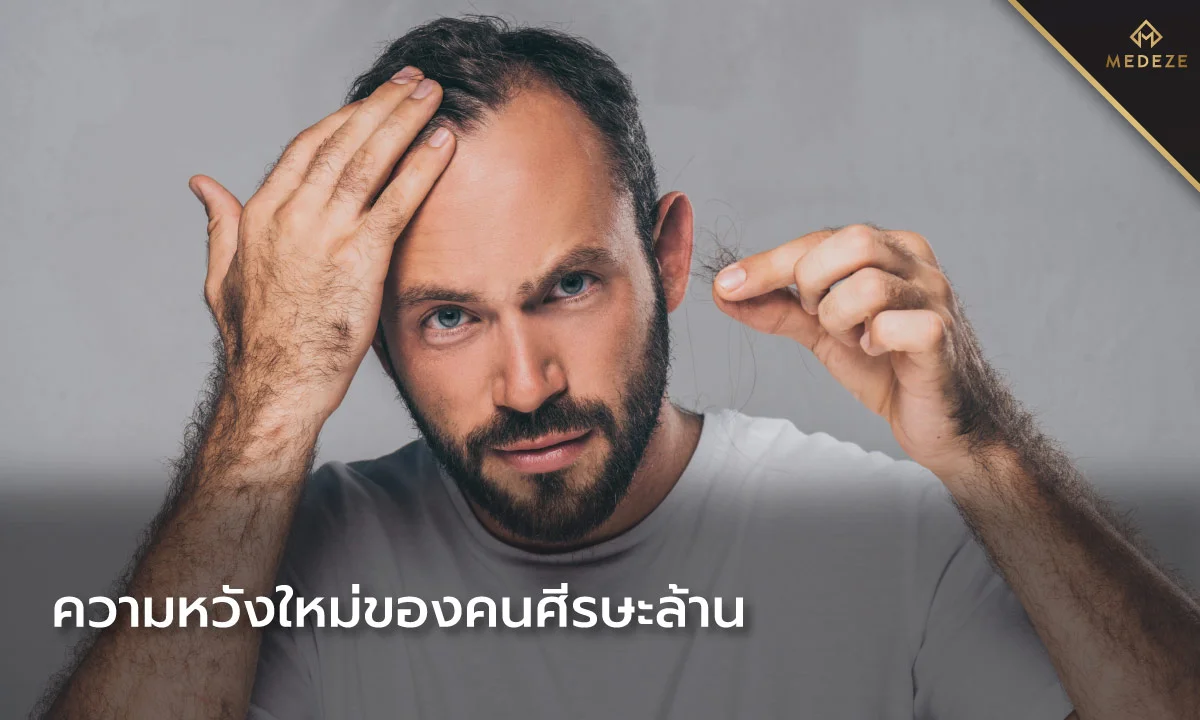
Hair thinning, hair loss, and baldness are increasingly common and appearing at younger ages due to genetics, male hormones, stress, pollution, and nutritional deficiency, affecting confidence and quality of life. Some patterns — such as patchy loss or losing more than 100 hairs a day — may signal an underlying condition that warrants medical evaluation.
This piece reviews the current treatment options and the role of follicular (hair root) stem cells as an innovation aimed at addressing the problem at its source.
Treatment Landscape
Each accepted treatment today has its own limitations, so new options continue to be explored, including follicular stem cells — which are specifically primed to develop into hair follicle structures and can be expanded in large quantities, helping overcome the limitations of traditional hair transplantation.
- 1Minoxidil: applied to the scalp to increase circulation; effect fades once stopped
- 2Finasteride: reduces the effect of male hormones on follicles; effect fades once stopped
- 3Hair transplantation and low-level laser therapy
- 4Emerging approaches: gene therapy and follicular stem cells
The Role of Follicular Stem Cells
Follicular stem cells are specifically able to develop into hair-related cells, reducing the concern that transplanted cells might become skin or fat, and they can be expanded in large quantities in the laboratory — making them a promising option for long-term treatment planning. That said, this remains an approach still under development and study.
- Follicular stem cells specifically develop into hair follicle structures
- They can be expanded in large quantities, reducing the limits of traditional transplantation
- Still an approach under development — consult a physician to assess suitability
Key Findings / Insights
- Follicular stem cells aim to reactivate hair root cells and address the root cause
- Results are expected to be best while follicles are not yet permanently damaged
- Should be considered alongside scalp care and an individual assessment by a physician
References
- Nichols H. Baldness: How close are we to a cure? Medical News Today, Jun 2017. https://www.medicalnewstoday.com/articles/317788
- Siamrath Online. Chulalongkorn researchers find laser therapy for genetic hair loss within 6 months. Sep 2021. https://siamrath.co.th/n/280372
- Sanook. How to treat hair thinning and loss — physicians' advice. Mar 2021. https://www.sanook.com/health/27509/
Related Resources
Frequently Asked Questions (FAQs)
Is follicular stem cell therapy suitable for all stages of baldness?
Results are expected to be best when hair follicles remain. For permanent baldness with fully damaged follicles, other approaches may be needed as well; consult a physician for an individual assessment.